



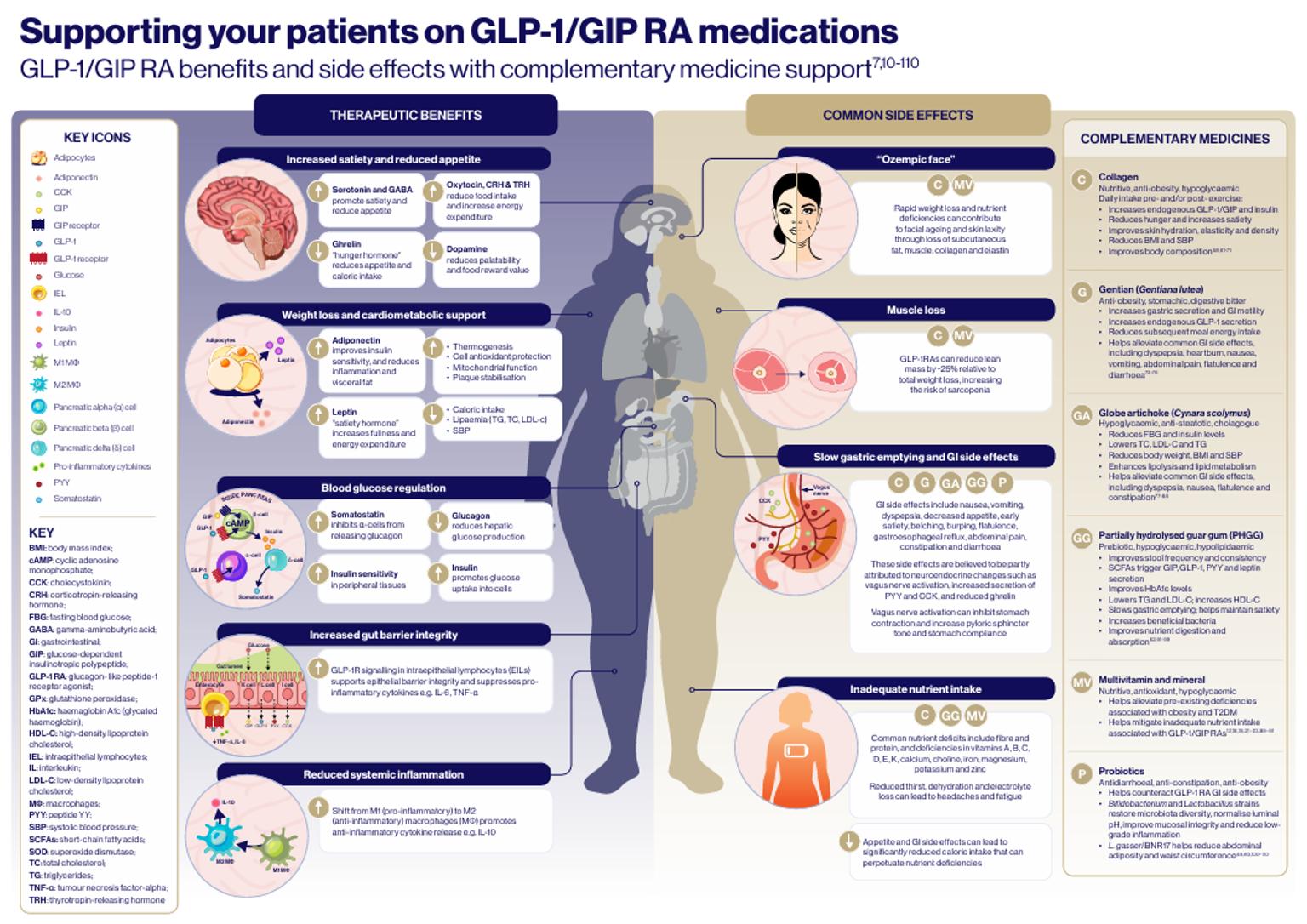
Latest infographic: Supporting your patients on GLP-1/GIP RA medications
Date
29 Jul 2026
Author/Presenter
Share
Glucagon-like peptide-1 (GLP-1) and glucose dependent insulinotropic polypeptide (GIP) receptor agonists (RAs) are changing the way weight and metabolic health are managed.
These medications can support areas such as weight loss, appetite control, blood glucose regulation and cardiometabolic health. However, patients may also experience challenges that affect comfort, adherence and long-term outcomes.
Common concerns include nausea, reflux, constipation, diarrhoea, dehydration, fatigue, inadequate nutrient intake and loss of lean muscle mass.
Integrative, interdisciplinary care (including dietitians, naturopaths, nutritionists, exercise physiologists and clinical psychologists) can support patient safety, reduce adverse events and improve adherence and long-term outcomes. This approach is valuable in preparation for pharmacotherapy, during treatment and after planned cessation, with targeted nutritional screening and optimisation at each stage.6,10-13
References
1. Falster MO, De Oliveira Costa J, Milder T, et al. The GLP-1 RA boom: Trends in publicly subsidised and private access in Australia, 2020-2025 [Internet]. Cardiovascular Medicine; 2025 [cited 2026 Mar 30]. Available from: http://medrxiv.org/lookup/doi/10.1101/2025.10.30.25339120
2. Liu Z, Yu S, Jin X, et al. The Clinical Application of GLP-1RAs and GLP-1/GIP Dual Receptor Agonists Based on Pharmacological Mechanisms: A Review. Drug Des Devel Ther. 2025; 19:10383–409. doi:10.2147/DDDT.S559919
3. Alkhezi OS, Alahmed AA, Alfayez OM, et al. Comparative effectiveness of glucagon‐like peptide‐1 receptor agonists for the management of obesity in adults without diabetes: A network meta‐analysis of randomized clinical trials. Obes Rev. 2023;24(3):e13543. doi:10.1111/obr.13543
4. Reiss AB, Gulkarov S, Lau R, et al. Weight Reduction with GLP-1 Agonists and Paths for Discontinuation While Maintaining Weight Loss. Biomolecules. 2025;15(3):408. doi:10.3390/biom15030408
5. West S, Scragg J, Aveyard P, et al. Weight regain after cessation of medication for weight management: systematic review and meta-analysis. BMJ. 2026;392:e085304. doi:10.1136/bmj-2025-085304
6. Yates N, South TL. Injectable drugs for weight management. Aust Prescr. 2025;48(6):197–202. doi:10.18773/austprescr.2025.052
7. Michos ED, Lopez‐Jimenez F, Gulati M. Role of Glucagon‐Like Peptide‐1 Receptor Agonists in Achieving Weight Loss and Improving Cardiovascular Outcomes in People With Overweight and Obesity. J Am Heart Assoc. 2023;12(11):e029282. doi:10.1161/JAHA.122.029282
8. Gorgojo-Martínez JJ, Mezquita-Raya P, Carretero-Gómez J, et al. Clinical Recommendations to Manage Gastrointestinal Adverse Events in Patients Treated with Glp-1 Receptor Agonists: A Multidisciplinary Expert Consensus. J Clin Med. 2022;12(1):145. doi:10.3390/jcm12010145
9. Rodriguez PJ, Zhang V, Gratzl S, et al. Discontinuation and Reinitiation of Dual-Labeled GLP-1 Receptor Agonists Among US Adults With Overweight or Obesity. JAMA Netw Open. 2025;8(1):e2457349. doi:10.1001/jamanetworkopen.2024.57349
10. Moll H, Frey E, Gerber P, et al. GLP-1 receptor agonists for weight reduction in people living with obesity but without diabetes: a living benefit–harm modelling study. eClinicalMedicine. 2024;73:102661. doi:10.1016/j.eclinm.2024.102661
11. Freeman AM, Aggarwal M. Malnutrition in the Obese. J Am Coll Cardiol. 2020;76(7):841–3. doi:10.1016/j.jacc.2020.06.059
12. Al-Najim W, Raposo A, BinMowyna MN, et al. Unintended Consequences of Obesity Pharmacotherapy: A Nutritional Approach to Ensuring Better Patient Outcomes. Nutrients. 2025;17(11):1934. doi:10.3390/nu17111934
13. Sibal R, Balamurugan G, Langley J, et al. Macronutrient, Micronutrient Supplementation and Monitoring for Patients on GLP-1 Agonists: Can We Learn from Metabolic and Bariatric Surgery? Nutrients. 2025;17(23):3659. doi:10.3390/nu17233659
14. Lin S, Deng Y, Huang J, et al. Efficacy and safety of GLP-1 receptor agonists on weight management and metabolic parameters in PCOS women: a meta-analysis of randomized controlled trials. Sci Rep. 2025;15(1):16512. doi:10.1038/s41598-025-99622-4
15. Subhani M, Dhanda A, King JA, et al. Association between glucagon-like peptide-1 receptor agonists use and change in alcohol consumption: a systematic review. eClinicalMedicine. 2024;78:102920. doi:10.1016/j.eclinm.2024.102920
16. Fallows E. Malnutrition with use of GLP-1 agonists is an underestimated real world harm. BMJ. 2025;390:r1512. doi:10.1136/bmj.r1512
17. Gentinetta S, Sottotetti F, Manuelli M, et al. Dietary Recommendations for the Management of Gastrointestinal Symptoms in Patients Treated with GLP-1 Receptor Agonist. Diabetes Metab Syndr Obes. 2024;Volume 17:4817–24. doi:10.2147/DMSO.S494919
18. Kerlikowsky F, Krämer K, Eggersdorfer M, et al. GLP-1 Receptor Agonists – Good for Body Weight, Bad for Micronutrient Status? Curr Dev Nutr. 2025;9(11):107587. doi:10.1016/j.cdnut.2025.107587
19. Scott Butsch W, Sulo S, Chang AT, et al. Nutritional deficiencies and muscle loss in adults with type 2 diabetes using GLP-1 receptor agonists: A retrospective observational study. Obes Pillars. 2025;15:100186. doi:10.1016/j.obpill.2025.100186
20. He L, Li Q, Yang Y, et al. Pharmacovigilance study of GLP-1 receptor agonists for metabolic and nutritional adverse events. Front Pharmacol. 2024;15:1416985. doi:10.3389/fphar.2024.1416985
21. Koceva A, Janež A, Pečko T, et al. Micronutrient Deficiencies in the Era of Second-Generation Incretin-Based Therapies for Obesity. Nutrients. 2026;18(4):677. doi:10.3390/nu18040677
22. Mozaffarian D, Agarwal M, Aggarwal M, et al. Nutritional priorities to support GLP ‐1 therapy for obesity: A joint Advisory from the American College of Lifestyle Medicine, the American Society for Nutrition, the Obesity Medicine Association, and The Obesity Society. Obesity. 2025;33(8):1475–503. doi:10.1002/oby.24336
23. Sander J, Torensma B, Siepe J, et al. Assessment of Preoperative Multivitamin Use on the Impact on Micronutrient Deficiencies in Patients with Obesity Prior to Metabolic Bariatric Surgery. Obes Surg. 2025;35(5):1818–26. doi:10.1007/s11695-025-07853-1
24. Paschou IA, Sali E, Paschou SA, et al. GLP-1RA and the possible skin aging. Endocrine. 2025;89(3):680–5. doi:10.1007/s12020-025-04293-w
25. Ghusn W, Hurtado MD. Glucagon-like Receptor-1 agonists for obesity: Weight loss outcomes, tolerability, side effects, and risks. Obes Pillars. 2024;12:100127. doi:10.1016/j.obpill.2024.100127
26. Liu L. A real-world data analysis of tirzepatide in the FDA adverse event reporting system (FAERS) database. Front Pharmacol. 2024;15:1397029. doi:10.3389/fphar.2024.1397029
27. Drucker DJ. Efficacy and Safety of GLP-1 Medicines for Type 2 Diabetes and Obesity. Diabetes Care. 2024;47(11):1873–88. doi:10.2337/dci24-0003
28. Almohareb SN, Alfayez OM, Aljuaid SS, et al. Effectiveness and Safety of GLP-1 Receptor Agonists in Patients with Type 1 Diabetes. J Clin Med. 2024;13(21):6532. doi:10.3390/jcm13216532
29. Karakasis P, Patoulias D, Fragakis N, et al. Effect of glucagon-like peptide-1 receptor agonists and co-agonists on body composition: Systematic review and network meta-analysis. Metabolism. 2025;164:156113. doi:10.1016/j.metabol.2024.156113
30. Nguyen N, Aguilar A, Afzal N, et al. Topical Volumizing Cream Improves Facial Volume and Skin Health in Adults With Rapid Weight Loss From Pharmacologic ( GLP ‐1/ GIP Agonists), Surgical, or Behavioral Interventions. J Cosmet Dermatol. 2026;25(1):e70681. doi:10.1111/jocd.70681
31. Bruns Vi N, Tressler EH, Vendruscolo LF, et al. IUPHAR review – Glucagon-like peptide-1 (GLP-1) and substance use disorders: An emerging pharmacotherapeutic target. Pharmacol Res. 2024;207:107312. doi:10.1016/j.phrs.2024.107312
32. Farokhnia M, Tazare J, Pince CL, et al. Glucagon-like peptide-1 receptor agonists, but not dipeptidyl peptidase-4 inhibitors, reduce alcohol intake. J Clin Invest. 2025;135(9):e188314. doi:10.1172/JCI188314
33. Forslund M, Wändell P, Forsberg L, et al. GLP-1 receptor agonist treatment in women with polycystic ovary syndrome—a systematic review and meta-analysis. Eur J Endocrinol. 2026;194(3):S25–39. doi:10.1093/ejendo/lvag033
34. Frangie Machado M, Shunk T, Hansen G, et al. Clinical Effects of Glucagon-Like Peptide-1 Agonist Use for Weight Loss in Women With Polycystic Ovary Syndrome: A Scoping Review. Cureus. 2024. doi:10.7759/cureus.66691
35. Hendershot CS, Bremmer MP, Paladino MB, et al. Once-Weekly Semaglutide in Adults With Alcohol Use Disorder: A Randomized Clinical Trial. JAMA Psychiatry. 2025;82(4):395. doi:10.1001/jamapsychiatry.2024.4789
36. Jerlhag E. GLP-1 Receptor Agonists: Promising Therapeutic Targets for Alcohol Use Disorder. Endocrinology. 2025;166(4):bqaf028. doi:10.1210/endocr/bqaf028
37. Petrie GN, Mayo LM. GLP-1 receptor agonists for the treatment of alcohol use disorder. J Clin Invest. 2025;135(9):e192414. doi:10.1172/JCI192414
38. Srinivasan NM, Farokhnia M, Farinelli LA, et al. GLP-1 Therapeutics and Their Emerging Role in Alcohol and Substance Use Disorders: An Endocrinology Primer. J Endocr Soc. 2025;9(11):bvaf141. doi:10.1210/jendso/bvaf141
39. Bray JJH, Foster‐Davies H, Salem A, et al. Glucagon‐like peptide‐1 receptor agonists improve biomarkers of inflammation and oxidative stress: A systematic review and meta‐analysis of randomised controlled trials. Diabetes Obes Metab. 2021;23(8):1806–22. doi:10.1111/dom.14399
40. Cena H, Chiovato L, Nappi RE. Obesity, Polycystic Ovary Syndrome, and Infertility: A New Avenue for GLP-1 Receptor Agonists. J Clin Endocrinol Metab. 2020;105(8):e2695–709. doi:10.1210/clinem/dgaa285
41. Liu Y, Ruan B, Jiang H, et al. The Weight-loss Effect of GLP-1RAs Glucagon-Like Peptide-1 Receptor Agonists in Non-diabetic Individuals with Overweight or Obesity: A Systematic Review with Meta-Analysis and Trial Sequential Analysis of Randomized Controlled Trials. Am J Clin Nutr. 2023;118(3):614–26. doi:10.1016/j.ajcnut.2023.04.017
42. Zheng Z, Zong Y, Ma Y, et al. Glucagon-like peptide-1 receptor: mechanisms and advances in therapy. Signal Transduct Target Ther. 2024;9(1):234. doi:10.1038/s41392-024-01931-z
43. Tongta S, Sungkaworn T, Pathomthongtaweechai N. Neurobiological Mechanisms and Therapeutic Potential of Glucagon-like Peptide-1 Receptor Agonists in Binge Eating Disorder: A Narrative Review. Int J Mol Sci. 2025;26(22):10974. doi:10.3390/ijms262210974
44. Moiz A, Filion KB, Tsoukas MA, et al. Mechanisms of GLP-1 Receptor Agonist-Induced Weight Loss: A Review of Central and Peripheral Pathways in Appetite and Energy Regulation. Am J Med. 2025;138(6):934–40. doi:10.1016/j.amjmed.2025.01.021
45. Nauck MA, D‘Alessio DA. Tirzepatide, a dual GIP/GLP-1 receptor co-agonist for the treatment of type 2 diabetes with unmatched effectiveness regrading glycaemic control and body weight reduction. Cardiovasc Diabetol. 2022;21(1):169. doi:10.1186/s12933-022-01604-7
46. Silver HJ, Olson D, Mayfield D, et al. Effect of the glucagon‐like peptide‐1 receptor agonist liraglutide, compared to caloric restriction, on appetite, dietary intake, body fat distribution and cardiometabolic biomarkers: A randomized trial in adults with obesity and prediabetes. Diabetes Obes Metab. 2023;25(8):2340–50. doi:10.1111/dom.15113
47. Yao H, Zhang A, Li D, et al. Comparative effectiveness of GLP-1 receptor agonists on glycaemic control, body weight, and lipid profile for type 2 diabetes: systematic review and network meta-analysis. BMJ. 2024;384:e076410. doi:10.1136/bmj-2023-076410
48. Zikou E, Dovrolis N, Dimosthenopoulos C, et al. The Effect of Probiotic Supplements on Metabolic Parameters of People with Type 2 Diabetes in Greece—A Randomized, Double-Blind, Placebo-Controlled Study. Nutrients. 2023;15(21):4663. doi:10.3390/nu15214663
49. Alharbi SH. Anti-inflammatory role of glucagon-like peptide 1 receptor agonists and its clinical implications. Ther Adv Endocrinol Metab. 2024;15:20420188231222367. doi:10.1177/20420188231222367
50. Singh K, Aulakh SK, Nijjar GS, et al. Rebalancing the Gut: Glucagon-Like Peptide-1 Agonists as a Strategy for Obesity and Metabolic Health. Cureus. 2024. doi:10.7759/cureus.64738
51. Ros-Madrid I, Cano-Mármol RP, Ferrer-Gomez M, et al. Anti-inflammatory properties of GLP-1 receptor agonists and other ancillary benefits from a pharmacological perspective. Can J Physiol Pharmacol. 2025;103(12):369–77. doi:10.1139/cjpp-2025-0148
52. Dimic N, Djuric M, Vejapi M, et al. The role of GLP-1 in the pathophysiology and treatment of sepsis: a narrative review. Front Med. 2025;12:1612034. doi:10.3389/fmed.2025.1612034
53. Lucente D, Bellino S, La Salvia A. GLP-1 Receptor Agonists in Solid Tumour Therapy: Exploring Their Anticancer Potential and Underlying Molecular Pathways. Genes. 2025;16(11):1352. doi:10.3390/genes16111352
54. Amorim Moreira Alves G, Teranishi M, Teixeira De Castro Gonçalves Ortega AC, et al. Mechanisms of GLP-1 in Modulating Craving and Addiction: Neurobiological and Translational Insights. Med Sci. 2025;13(3):136. doi:10.3390/medsci13030136
55. Yang L, Chen L, Li D, et al. Effect of GLP‐1/GLP‐1R on the Polarization of Macrophages in the Occurrence and Development of Atherosclerosis. Chen J, editor. Mediators Inflamm. 2021;2021(1):5568159. doi:10.1155/2021/5568159
56. Le R, Nguyen MT, Allahwala MA, et al. Cardiovascular Protective Properties of GLP-1 Receptor Agonists: More than Just Diabetic and Weight Loss Drugs. J Clin Med. 2024;13(16):4674. doi:10.3390/jcm13164674
57. Oh Y, Jun HS. Effects of Glucagon-Like Peptide-1 on Oxidative Stress and Nrf2 Signaling. Int J Mol Sci. 2017;19(1):26. doi:10.3390/ijms19010026
58. Grasset E, Briand F, Virgilio N, et al. A Specific Collagen Hydrolysate Improves Postprandial Glucose Tolerance in Normoglycemic and Prediabetic Mice and in a First Proof of Concept Study in Healthy, Normoglycemic and Prediabetic Humans. Food Sci Nutr. 2024;12(11):9607–20. doi:10.1002/fsn3.4538
59. Drucker DJ. The GLP-1 journey: from discovery science to therapeutic impact. J Clin Invest. 2024;134(2):e175634. doi:10.1172/JCI175634
60. Álvarez-Arraño V, Martín-Peláez S. Effects of Probiotics and Synbiotics on Weight Loss in Subjects with Overweight or Obesity: A Systematic Review. Nutrients. 2021;13(10):3627. doi:10.3390/nu13103627
61. Reynolds KM, Hansell EJ, Thorley J, et al. The effects of collagen peptide supplementation on appetite and post-exercise energy intake in females: a randomised controlled trial. Br J Nutr. 2025;134(4):265–76. doi:10.1017/S0007114525103851
62. Dias DD, Vasconcelos AR, Souza ACR, et al. Nutritional Approaches to Enhance GLP-1 Analogue Therapy in Obesity: A Narrative Review. Obesities. 2025;5(4):88. doi:10.3390/obesities5040088
63. Balshaw TG, Funnell MP, McDermott E, Maden‐Wilkinson TM, Abela S, Quteishat B, et al. The effect of specific bioactive collagen peptides on function and muscle remodeling during human resistance training. Acta Physiol. 2023;237(2):e13903. doi:10.1111/apha.13903
64. Jendricke P, Centner C, Zdzieblik D, et al. Specific Collagen Peptides in Combination with Resistance Training Improve Body Composition and Regional Muscle Strength in Premenopausal Women: A Randomized Controlled Trial. Nutrients. 2019;11(4):892. doi:10.3390/nu11040892
65. Kirmse M, Oertzen-Hagemann V, De Marées M, et al. Prolonged Collagen Peptide Supplementation and Resistance Exercise Training Affects Body Composition in Recreationally Active Men. Nutrients. 2019;11(5):1154. doi:10.3390/nu11051154
66. López-Yoldi M, Riezu-Boj JI, Abete I, et al. Anti-Obesity Effects of a Collagen with Low Digestibility and High Swelling Capacity: A Human Randomized Control Trial. Nutrients. 2024;16(20):3550. doi:10.3390/nu16203550
67. Park J, Kim M, Shin H, et al. Low-Molecular Collagen Peptide Supplementation and Body Fat Mass in Adults Aged ≥ 50 Years: A Randomized, Double-Blind, Placebo-Controlled Trial. Clin Nutr Res. 2023;12(4):245. doi:10.7762/cnr.2023.12.4.245
68. Zdzieblik D, Jendricke P, Oesser S, et al. The Influence of Specific Bioactive Collagen Peptides on Body Composition and Muscle Strength in Middle-Aged, Untrained Men: A Randomized Controlled Trial. Int J Environ Res Public Health. 2021;18(9):4837. doi:10.3390/ijerph18094837
69. Kim DU, Chung HC, Choi J, et al. Oral Intake of Low-Molecular-Weight Collagen Peptide Improves Hydration, Elasticity, and Wrinkling in Human Skin: A Randomized, Double-Blind, Placebo-Controlled Study. Nutrients. 2018;10(7):826. doi:10.3390/nu10070826
70. Lee M, Kim E, Ahn H, et al. Oral intake of collagen peptide NS improves hydration, elasticity, desquamation, and wrinkling in human skin: a randomized, double-blinded, placebo-controlled study. Food Funct. 2023;14(7):3196–207. doi:10.1039/D2FO02958H
71. Pu SY, Huang YL, Pu CM, et al. Effects of Oral Collagen for Skin Anti-Aging: A Systematic Review and Meta-Analysis. Nutrients. 2023;15(9):2080. doi:10.3390/nu15092080
72. Ponticelli M, Lela L, Moles M, et al. The healing bitterness of Gentiana lutea L., phytochemistry and biological activities: A systematic review. Phytochemistry. 2023;206:113518. doi:10.1016/j.phytochem.2022.113518
73. Mennella I, Fogliano V, Ferracane R, et al. Microencapsulated bitter compounds (from Gentiana lutea) reduce daily energy intakes in humans. Br J Nutr. 2016;116(10):1841–50. doi:10.1017/S0007114516003858
74. Mirzaee F, Hosseini A, Jouybari HB, et al. Medicinal, biological and phytochemical properties of Gentiana species. J Tradit Complement Med. 2017;7(4):400–8. doi:10.1016/j.jtcme.2016.12.013
75. Joksic G, Radak D, Sudar-Milovanovic E, et al. Effects of Gentiana lutea Root on Vascular Diseases. Curr Vasc Pharmacol. 2021;19(4):359–69. doi:10.2174/1570161118666200529111314
76. Dinić S, Vidaković M, Arambašić Jovanović J, et al. Therapeutic Potential of Gentianaceae Family Plants in the Treatment of Diabetes and Its Complications. Biomedicines. 2025;13(11):2822. doi:10.3390/biomedicines13112822
77. Mahboubi M. Cynara scolymus (artichoke) and its efficacy in management of obesity. Bull Fac Pharm Cairo Univ. 2018;56(2):115–20. doi:10.1016/j.bfopcu.2018.10.003
78. Olas B. An overview of the versatility of the parts of the Globe Artichoke (Cynara scolymus l.), its by-products and dietary supplements. Nutrients. 2024;16(5):599. doi:10.3390/nu16050599
79. Phimarn W, Sungthong B, Wichiyo K. Effect of Cynara scolymus L. on Cardiometabolic Outcomes: An Updated Meta-analysis of Randomized Controlled Trials and Meta-regression. Pharmacogn Mag. 2024;20(2):372–88. doi:10.1177/09731296231217557
80. Sharma P, Kumar Verma P, Kishore Pankaj N, et al. The Phytochemical Ingredients and Therapeutic Potential of Cynara scolymus L. Pharm Biomed Res. 2021. doi:10.18502/pbr.v7i3.7696
81. Sahebkar A, Pirro M, Banach M, et al. Lipid-lowering activity of artichoke extracts: A systematic review and meta-analysis. Crit Rev Food Sci Nutr. 2018;58(15):2549–56. doi:10.1080/10408398.2017.1332572
82. Cicero AFG, Fogacci F, Tocci G, et al. Three arms, double-blind, non-inferiority, randomized clinical study testing the lipid-lowering effect of a novel dietary supplement containing red yeast rice and artichoke extracts compared to Armolipid Plus® and placebo. Arch Med Sci. 2023;19(5):1169–79. doi:10.5114/aoms/167969
83. Feiden T, Valduga E, Zeni J, et al. Bioactive Compounds from Artichoke and Application Potential. Food Technol Biotechnol. 2023;61(3):312–27. doi:10.17113/ftb.61.03.23.8038
84. Di Napoli A, Germani F, Domingues Da Silva S, et al. Artichoke (Cynara scolymus L.): a review of its health-promoting properties. Pharmadvances. 2024;6(1s):07. doi:10.36118/pharmadvances.2023.55
85. Ayuso P, Quizhpe J, Rosell MDLÁ, et al. Bioactive Compounds, Health Benefits and Food Applications of Artichoke (Cynara scolymus L.) and Artichoke By-Products: A Review. Appl Sci. 2024;14(11):4940. doi:10.3390/app14114940
86. Bekheet S, Sota V. Biodiversity and medicinal uses of globe artichoke (Cynara scolymus L.) plant. J Biodivers Conserv Bioresour Manag. 2019;5(1):39–54. doi:10.3329/jbcbm.v5i1.42184
87. Colombo R, Moretto G, Pellicorio V, et al. Globe Artichoke (Cynara scolymus L.) By-Products in Food Applications: Functional and Biological Properties. Foods. 2024;13(10):1427. doi:10.3390/foods13101427
88. Teterovska R, Skotele RE, Maurina B, et al. Medicinal Plants in Food Supplements for Gastrointestinal Disorders: Critical Assessment of Health Claims on Gastric Acid Regulation. Nutrients. 2025;17(23):3674. doi:10.3390/nu17233674
89. Sánchez MC, Herráiz A, Ciudad MJ, et al. Metabolomics and Biochemical Benefits of Multivitamin and Multimineral Supplementation in Healthy Individuals: A Pilot Study. Foods. 2024;13(14):2207. doi:10.3390/foods13142207
90. Johnson B, Milstead M, Thomas O, et al. Investigating nutrient intake during use of glucagon-like peptide-1 receptor agonist: a cross-sectional study. Front Nutr. 2025;12:1566498. doi:10.3389/fnut.2025.1566498
91. Johnson BVB, Milstead M, Kreider R, et al. Dietary supplement considerations during glucagon-like Peptide-1 receptor agonist treatment: A narrative review. Obes Pillars. 2025;16:100209. doi:10.1016/j.obpill.2025.100209
92. Edelman M, Wang Q, Ahnen R, et al. The Dose Response Effects of Partially Hydrolyzed Guar Gum on Gut Microbiome of Healthy Adults. Appl Microbiol. 2024;4(2):720–30. doi:10.3390/applmicrobiol4020049
93. Ojo O, Feng QQ, Ojo OO, et al. The Role of Dietary Fibre in Modulating Gut Microbiota Dysbiosis in Patients with Type 2 Diabetes: A Systematic Review and Meta-Analysis of Randomised Controlled Trials. Nutrients. 2020;12(11):3239. doi:10.3390/nu12113239
94. Reider SJ, Moosmang S, Tragust J, et al. Prebiotic Effects of Partially Hydrolyzed Guar Gum on the Composition and Function of the Human Microbiota—Results from the PAGODA Trial. Nutrients. 2020;12(5):1257. doi:10.3390/nu12051257
95. Sergeev IN, Aljutaily T, et al. Effects of Synbiotic Supplement on Human Gut Microbiota, Body Composition and Weight Loss in Obesity. Nutrients. 2020;12(1):222. doi:10.3390/nu12010222
96. Van Der Schoot A, Drysdale C, Whelan K, et al. The Effect of Fiber Supplementation on Chronic Constipation in Adults: An Updated Systematic Review and Meta-Analysis of Randomized Controlled Trials. Am J Clin Nutr. 2022;116(4):953–69. doi:10.1093/ajcn/nqac184
97. Yasukawa Z, Inoue R, Ozeki M, et al. Effect of Repeated Consumption of Partially Hydrolyzed Guar Gum on Fecal Characteristics and Gut Microbiota: A Randomized, Double-Blind, Placebo-Controlled, and Parallel-Group Clinical Trial. Nutrients. 2019;11(9):2170. doi:10.3390/nu11092170
98. Setayesh L, Pourreza S, Zeinali Khosroshahi M, et al. The effects of guar gum supplementation on lipid profile in adults: a GRADE-assessed systematic review, meta-regression and dose–response meta-analysis of randomised placebo-controlled trials. Br J Nutr. 2023;129(10):1703–13. doi:10.1017/S0007114522002136
99. Mysonhimer AR, Holscher HD. Gastrointestinal Effects and Tolerance of Nondigestible Carbohydrate Consumption. Adv Nutr. 2022;13(6):2237–76. doi:10.1093/advances/nmac094
100. Li G, Feng H, Mao XL, et al. The effects of probiotics supplementation on glycaemic control among adults with type 2 diabetes mellitus: a systematic review and meta-analysis of randomised clinical trials. J Transl Med. 2023;21(1):442. doi:10.1186/s12967-023-04306-0
101. Setayesh A, Karimi M, Karimi MA, et al. Effects of Probiotic and Synbiotic Supplementation on Glycemic Indices in Adult Individuals with Prediabetes and Type 2 Diabetes Mellitus: A Grade-Assessed Systematic Review and Dose–Response Meta-analysis of RCTs. Probiotics Antimicrob Proteins. 2025;18(2):3181–204. doi:10.1007/s12602-025-10644-w
102. Yao K, Zeng L, He Q, et al. Effect of Probiotics on Glucose and Lipid Metabolism in Type 2 Diabetes Mellitus: A Meta-Analysis of 12 Randomized Controlled Trials. Med Sci Monit. 2017;23:3044–53. doi:10.12659/MSM.902600
103. Cao N, Zhao F, Kwok LY, et al. Impact of probiotics on weight loss, glucose and lipid metabolism in overweight or obese women: A meta-analysis of randomized controlled trials. Curr Res Food Sci. 2024;9:100810. doi:10.1016/j.crfs.2024.100810
104. Guo M, Li J, Zhang L, et al. Effects of oral supplementation of probiotics on body weight and visceral fat in obese patients: a meta-analysis and systematic review. Sci Rep. 2025;15(1):6355. doi:10.1038/s41598-025-90820-8
105. Aoun A, Darwish F, Hamod N. The Influence of the Gut Microbiome on Obesity in Adults and the Role of Probiotics, Prebiotics, and Synbiotics for Weight Loss. Prev Nutr Food Sci. 2020;25(2):113–23. doi:10.3746/pnf.2020.25.2.113
106. Bock PM, Telo GH, Ramalho R, et al. The effect of probiotics, prebiotics or synbiotics on metabolic outcomes in individuals with diabetes: a systematic review and meta-analysis. Diabetologia. 2021;64(1):26–41. doi:10.1007/s00125-020-05295-1
107. Hassan NE, El-Masry SA, El Shebini SM, et al. Effect of weight loss program using prebiotics and probiotics on body composition, physique, and metabolic products: longitudinal intervention study. Sci Rep. 2024;14(1):10960. doi:10.1038/s41598-024-61130-2
108. Mu J, Guo X, Zhou Y, et al. The Effects of Probiotics/Synbiotics on Glucose and Lipid Metabolism in Women with Gestational Diabetes Mellitus: A Meta-Analysis of Randomized Controlled Trials. Nutrients. 2023;15(6):1375. doi:10.3390/nu15061375
109. Shen X, Ma C, Yang Y, et al. The Role and Mechanism of Probiotics Supplementation in Blood Glucose Regulation: A Review. Foods. 2024;13(17):2719. doi:10.3390/foods13172719
110. Wang ZB, Xin SS, Ding LN, et al. The Potential Role of Probiotics in Controlling Overweight/Obesity and Associated Metabolic Parameters in Adults: A Systematic Review and Meta-Analysis. Evid Based Complement Alternat Med. 2019;2019:1–14. doi:10.1155/2019/3862971